Key takeaway
The abandoned palace Istana Woodneuk survived a major fire and the ravages of World War II by being rebuilt in 1935 and repurposed by the military, yet after a second fire in 2006, it was left to decay until its surrounding land was finally transferred to Singapore in 2025. Its architecture, historical significance, and connection to the Malay sultanate make it a unique cultural landmark. It now stands as a silent witness to Singapore’s royal and wartime past, hidden within dense greenery.
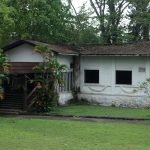
Tucked into the thick greenery between Holland Road and Tyersall Avenue, the ruins of Istana Woodneuk rise like a forgotten chapter of Singapore’s royal and wartime history. For decades it was the home of Malay royalty, then a military headquarters, and now it stands silent and hidden. Its history reflects both grandeur and tragedy. The palace’s survival offers insight into the colonial era, military occupation, and urban development surrounding Singapore’s central districts.
The palace’s royal beginnings
The site originally belonged in the 1850s to English trader John Dill Ross and later was acquired by Sultan Abu Bakar ibni Daeng Ibrahim of Johor, who combined the Woodneuk House with the neighboring Tyersall estate. Woodneuk then functioned as a royal residence on a 36‑acre parcel of land, formerly within the Tanglin Planning Area. This history connects with Singapore’s Most Haunted Building, reflecting a period when colonial architecture and Malay royalty coexisted closely.
Construction and naming
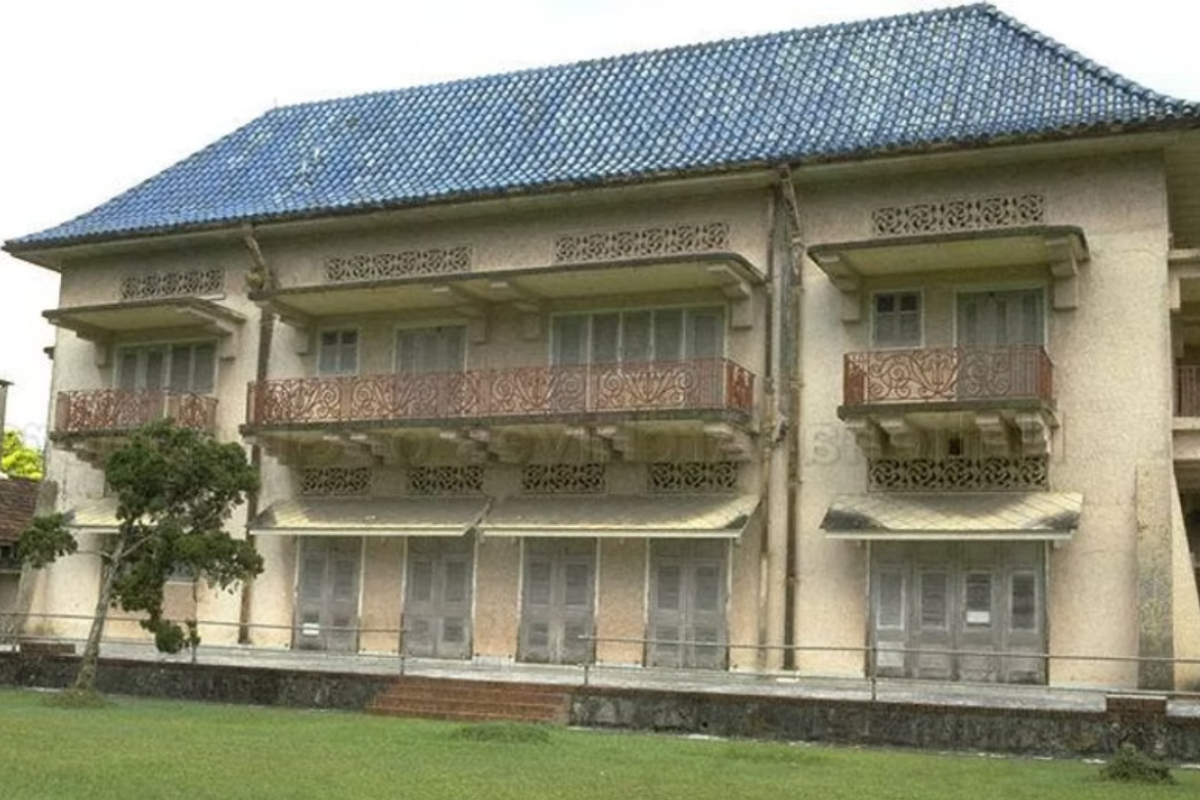
The version of Istana Woodneuk standing today was constructed between 1932 and 1935 by the architectural firm Swan & Maclaren under architect Denis Santry. It is a two‑story palace, located at 766 Tyersall Avenue, Singapore 257699. Though officially renamed Istana Wooden York after its rebuilding, the original name persisted. The palace combines neoclassical features with local adaptations such as wide verandas and high ceilings designed for tropical ventilation.
Fire, war and survival
Fire has shaped the palace’s story. Early versions of the estate suffered fires, but the 1935 reconstruction gave the building a fresh start. In 1942, during the Battle of Singapore, the palace and its grounds were requisitioned for military use and targeted during bombing raids, yet the main structure remained largely intact. Its resilience became a symbol of the adaptive reuse of royal properties during turbulent periods.
The 2006 blaze that sealed its fate
On 10 July 2006 the palace’s signature blue‑tiled roof collapsed in a major fire, leaving much of the interior exposed. The building was declared structurally unsafe and beyond repair. With that event, it ceased being a residence or military site and entered a prolonged period of neglect. Visitors today can reflect on how spaces like Haw Par Villa and the Gardens by the Bay also embody Singapore’s evolving heritage landscape and the tension between preservation and urban development.
- Acquisition of the Woodneuk plot by Sultan Abu Bakar (c. 1860s).
- Reconstruction of the two‑story palace between 1932‑35 by Swan & Maclaren.
- Use as military headquarters during World War II and survival of bombing.
- Second major fire in 2006 and abandonment of the palace.
- Land swap in 2025 transferring the palace grounds to the Singapore Government.
- Ongoing discussions on heritage preservation and adaptive reuse possibilities.
Quick facts at a glance
- Address: 766 Tyersall Avenue, Singapore 257699.
- Planning area: Tanglin, Central Region.
- Floor count: 2 storeys.
- Nearest MRT: Botanic Gardens MRT Station (Circle & Downtown Lines).
- Ownership history: State of Johor (to 2025), then Singapore Government.
- Architectural style: Neoclassical with tropical adaptations.
- Land area: Approximately 36 acres, including surrounding gardens and buffer zones.
- Access: Currently restricted; heritage tours are occasionally organized by interest groups.
| Building | Key facts | Nearest MRT | Sources |
|---|---|---|---|
| Istana Woodneuk | 2 storeys, completed 1935, rebuilt after earlier residence, neoclassical style with tropical adaptations. | Botanic Gardens MRT | Official sources |
Legends and local stories
Over the decades, Istana Woodneuk has inspired a range of local folklore and ghost stories. Neighbouring residents have recounted sightings of shadowy figures moving through the upper floors, strange whispers carried by the wind, and unexplained lights flickering where the grand halls once stood. Some tales suggest the spirits of former royal residents or soldiers linger among the ruins, while others speak of hidden passageways long sealed off. These stories, though anecdotal, add layers to the palace’s mystique and cultural memory. Heritage enthusiasts argue that preserving such narratives is as vital as conserving the physical structure, as they reflect community memory, Singapore’s colonial past, and the ways local imagination keeps history alive.
Architectural features in detail
Istana Woodneuk showcases a striking blend of European neoclassical design and tropical adaptation. The palace boasts soaring ceilings and wide verandas that allow natural ventilation, while spacious halls were designed for both ceremonial and domestic use. Its façade features arched windows, decorative pilasters, and Corinthian columns, emphasizing elegance and symmetry, while the interior once included royal suites, reception rooms, servant quarters, and functional service areas. Original timber beams, wooden flooring, and masonry walls remain in certain areas, offering insight into early 20th-century construction techniques and materials. Roof overhangs, louvered shutters, and cross-ventilation systems demonstrate how European principles were modified for Singapore’s hot and humid climate, making the building both stately and practical. Observing these elements, one can trace the evolution of colonial architecture and see how the palace was engineered to suit local environmental conditions.
A closer look at its survival and significance
It is rare for a royal residence in Singapore to endure over a century of change. Istana Woodneuk persisted through major social, political, and physical upheavals. Its survival answers the question posed by the title: it survived two fires and a war by adapting purposes and then standing dormant. Its gardens, water features, and architectural design provide insight into early 20th-century royal residences in Singapore.
Why it was rebuilt and repurposed
The 1935 rebuild provided fresh life and modern architecture for the Johor royalty in Singapore. When war threatened the region, the palace’s strategic location made it suitable as a military headquarters during the Japanese invasion. After the war, the palace was vacated and gradually forgotten. Even in disuse, it persisted physically and culturally, inspiring heritage enthusiasts to study early Malay royal estates.
What remains today and its future context
After years of neglect, the palace is overgrown, its iconic roof is gone, and access is restricted. In June 2025, a land swap gave the Singapore Government control of the site, opening a possibility for heritage protection or redevelopment. Visitors who wish to understand more about its historical context can refer to heritage protection details. Archaeological surveys and community discussions are ongoing, aiming to balance conservation with responsible public access. The surrounding flora and fauna now form an informal ecological buffer, making it a hidden urban forest within Singapore.
Looking ahead for the old royal palace’s legacy
While other palaces of the Johor sultanate in Singapore have been demolished, Istana Woodneuk endures, standing as a rare witness to over a century of history. Its resilience through fires, war, and decades of neglect is remarkable. Whether it will be restored, partially preserved, or transformed remains open—but the palace offers more than bricks and timber. It embodies stories of royal life, wartime adaptation, colonial architecture, and even local legends, showing how history, design, and nature intersect. Today, the ruins invite reflection on Singapore’s evolving urban landscape, offering both heritage enthusiasts and curious visitors a tangible link between past generations and the present.