Key takeaway
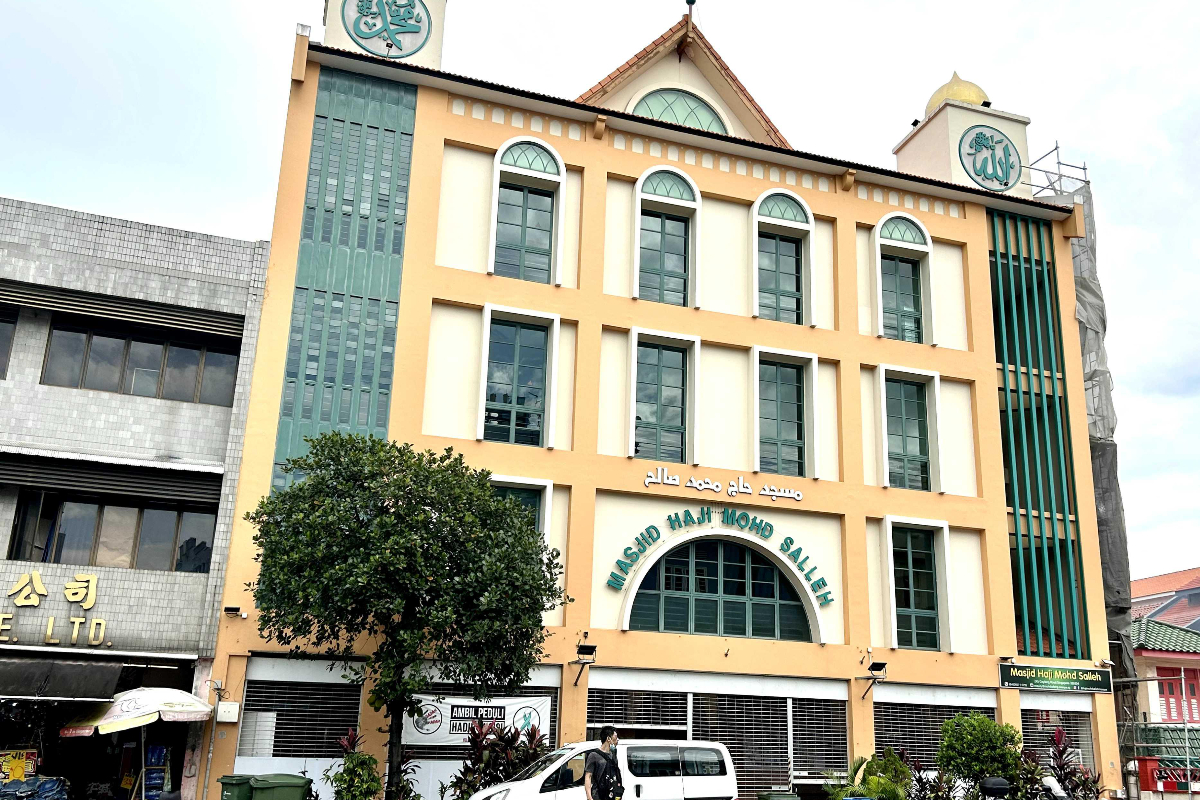
Masjid Haji Muhammad Salleh, built in 1903 at the foot of Mount Palmer, stands next to the sacred tomb (maqam) of the venerated saint Habib Noh. The mosque and shrine together tell a human story of friendship, faith, and legend: Haji Muhammad Salleh built the mosque for his saintly friend Habib Noh, and after Habib Noh’s death, his coffin stayed in place until they buried him on Mount Palmer. Today, people visit the mosque as a spiritual sanctuary, and pilgrims climb the hill to honor his memory.
On a quiet hill crowned by greenery, visitors encounter more than just bricks and mortar. They see the story of a saint, a devoted friend, and a mosque that has woven itself into Singapore’s spiritual and urban fabric. This is the tale behind Masjid Haji Muhammad Salleh, and the legend of Habib Noh’s sacred tomb at Mount Palmer.
The origins: friendship on Mount Palmer
Two remarkable figures shaped this history: Haji Muhammad Salleh, a Batavian (now Jakarta) merchant living in Singapore, and Habib Noh Al‑Habshi, a deeply respected Muslim saint. They shared a bond of mutual respect. Habib Noh often retreated to Mount Palmer, a small hill near Palmer Road, for quiet prayer. Haji Salleh admired him so much that he donated land at the foot of the hill and built a prayer hall, or surau, for him. Habib Noh died in 1866 before the surau opened.
The mosque takes shape: building the 1903 structure
After Habib Noh’s passing, Haji Muhammad Salleh realized his vision. Builders constructed a full mosque on the waqf land and completed it in 1903. Initially, it accommodated about 200 worshippers; later renovations expanded capacity to roughly 900, balancing modern needs with historical character. It’s similar to The Oasis in Kallang, where innovative design preserved heritage while serving contemporary use. In 1987, the mosque was upgraded to hold 500 people, and renovations around 2015–2017 added a lift, improved toilets, air-conditioning, and a glass canopy. The refurbishment cost around SGD 1.46 million.
The legend: Habib Noh’s miraculous tomb
Habib Noh Al‑Habshi, born in 1788, arrived in Singapore in 1819, shortly after Stamford Raffles. People admired him for his piety and kindness across communities. Stories recount him healing children and providing spiritual insight into people’s journeys.
When he died on 27 July 1866, an extraordinary event occurred: workers could not move his coffin to the cemetery. Someone recalled his wish to be buried on Mount Palmer, and only then did the coffin move.
The Parsi landowner and the moral of the miracle
A Parsi family owned Mount Palmer, and legend says they initially demanded a large fee for the burial. Supporters raised the money, but misfortune struck: some family members died before they returned the funds. Whether literal or symbolic, the tale shows how deeply people revered him.
The hill and shrine: architecture and pilgrimage
Visitors climb 49 steps to reach the maqam, or tomb of Habib Noh, ascending through lush greenery that frames the hilltop. The entrance and interior display elegant curtains, a sparkling chandelier, and a green cloth draped over the grave, blending Middle Eastern and European classical styles. The columns and louvres reveal Tuscan and Corinthian influences, reflecting careful attention to both spiritual and aesthetic details. Each design element invites contemplation, emphasizing the sacred nature of the space.
Behind Habib Noh’s tomb lies the grave of his cousin, Habib Abdurrahman bin Salim Al‑Habshi, Singapore’s first Islamic judge (qadi). Together, these tombs turn Mount Palmer into both a pilgrimage destination and a place for reflection on the intertwined history of faith, family, and community leadership.
Myths, miracles, and urban influence
Legends highlight how Mount Palmer shaped modern infrastructure in ways both practical and mysterious. In the 1980s, planners intended the East Coast Parkway (ECP) to cut directly through the hill. Bulldozers repeatedly failed, machinery stalled, and workers grew concerned. Locals recount how water from the maqam was poured over the foundation during prayers, and soon after, construction progressed without further interruption. Engineers ultimately curved the road to preserve the shrine, showing a rare case of urban planning bending to cultural heritage.
Mount Palmer’s story also demonstrates how faith can influence the urban landscape and community behavior. Visitors exploring heritage trails can connect with other historic sites along the way, which present similar cultural and historical depth within Singapore. These trails encourage reflection on the ways spiritual and civic life intersect across the city.
The mosque today: living heritage in the heart of the city
Today, Masjid Haji Muhammad Salleh and Maqam Habib Noh actively serve worshippers and pilgrims. The combined facility reopened in 2017 after a major upgrade. Visitors use a lift, ramps, and better facilities for easier access.
During the annual haul (death anniversary) of Habib Noh, thousands come to pay respects. Renovations now support around 700 congregants.
Quick facts about Masjid Haji Muhammad Salleh
For visitors and history enthusiasts, a few key details help put the mosque and Habib Noh’s tomb into context. These quick facts highlight its location, history, and recent upgrades:
- The mosque address is 37 Palmer Road, Singapore 079424.
- The shrine (maqam) remains closed for refurbishment as of mid‑2025.
- Habib Noh died in 1866.
- The mosque was upgraded with modern facilities in 2017.
- The hill climbs 49 steps.
- Recent renovations mirror efforts at heritage mosque, blending modern accessibility with history.
Masjid Haji Muhammad Salleh: A sequence of how the legend grew
The story of Mount Palmer and Habib Noh’s mosque unfolds through key events that shaped its spiritual and cultural significance over the years. Below is a chronological outline of how the legend developed:
- Habib Noh prays in solitude on Mount Palmer, supported by Haji Muhammad Salleh.
- Habib Noh dies in 1866; they bury him on Mount Palmer when his coffin refuses to move.
- A Parsi landowner demands money for the land; supporters raise funds, but misfortune strikes until they return it.
- They built a mausoleum (maqam) over Habib Noh’s tomb, merging European classical and Middle Eastern styles.
- In the 20th century, they constructed a full mosque next to the tomb for pilgrims.
- Highway construction threatens the hill; reported construction problems lead to rerouting.
- They refurbished the site in the 2010s, adding modern amenities while preserving architectural character.
Building profiles at Mount Palmer
| Building | Key facts | Nearest MRT | Sources |
|---|---|---|---|
| Masjid Haji Muhammad Salleh | Built in 1903, accommodates 700–900 after the 2017 renovation with a lift and better facilities. | Tanjong Pagar MRT | Mosque site |
| Maqam Habib Noh | Hilltop shrine with 49 steps, tomb of Habib Noh (died 1866) and his cousin; closed for refurbishment mid‑2025. | Tanjong Pagar MRT | Shrine site |
Why Masjid Haji Muhammad Salleh mosque matters
Masjid Haji Muhammad Salleh and the tomb of Habib Noh show more than architecture. They link a pious saint with his faithful friend and connect legend with modern life in Singapore. The road nearby once bent to avoid this hill, demonstrating how spiritual heritage shapes urban development. The mosque hosts daily prayers and community gatherings, keeping traditions alive. It also motivates younger generations to learn Singapore’s religious and cultural history.
Muslims use the site to reflect, pray, and connect with Habib Noh’s life. Visitors of any faith see that Singapore’s skyline holds stories beyond glass towers and modern construction. You can read more about Habib Noh’s spiritual legacy while exploring the mosque and hill. Many leave with a personal connection, recognizing how devotion can shape a city’s memory. The site encourages mindful visits, where silence and reflection accompany heritage tourism.
Masjid Haji Muhammad Salleh: A hilltop story that lives on
Mount Palmer’s 1903 mosque and Habib Noh’s sacred tomb continue to attract visitors, not just pilgrims, who pause, whisper a prayer, or feel a centuries‑old friendship echo through the green hill in the heart of the city. The power of devotion and memory remains evident today. Visitors leave with a sense of connection to Singapore’s spiritual heritage, gaining a deeper appreciation for the quiet stories woven into the mosque and tomb. Even a small hilltop site can hold immense cultural, historical, and spiritual significance, preserving the legacy of Habib Noh and Haji Muhammad Salleh for generations to come.