Key takeaway
Rochor Centre began as plain white HDB blocks in 1977 and later transformed into a rainbow-coloured community landmark. Its red, blue, green, and yellow towers brought joy, identity, and shared memories to residents and visitors. Though demolished in 2019 for the North-South Corridor, the spirit of its vibrant walls lives on through stories, photographs, and the enduring sense of community it fostered.
Walking through Rochor Centre’s history is like tracing the lives of its residents. Beyond concrete and paint, it was a hub of human connection. Initially white, then vivid in colour, the estate left behind a legacy beyond its physical walls.
The humble beginnings: white blocks of community
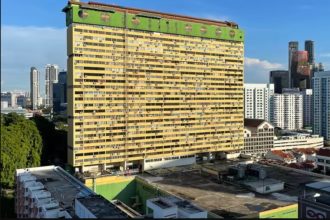
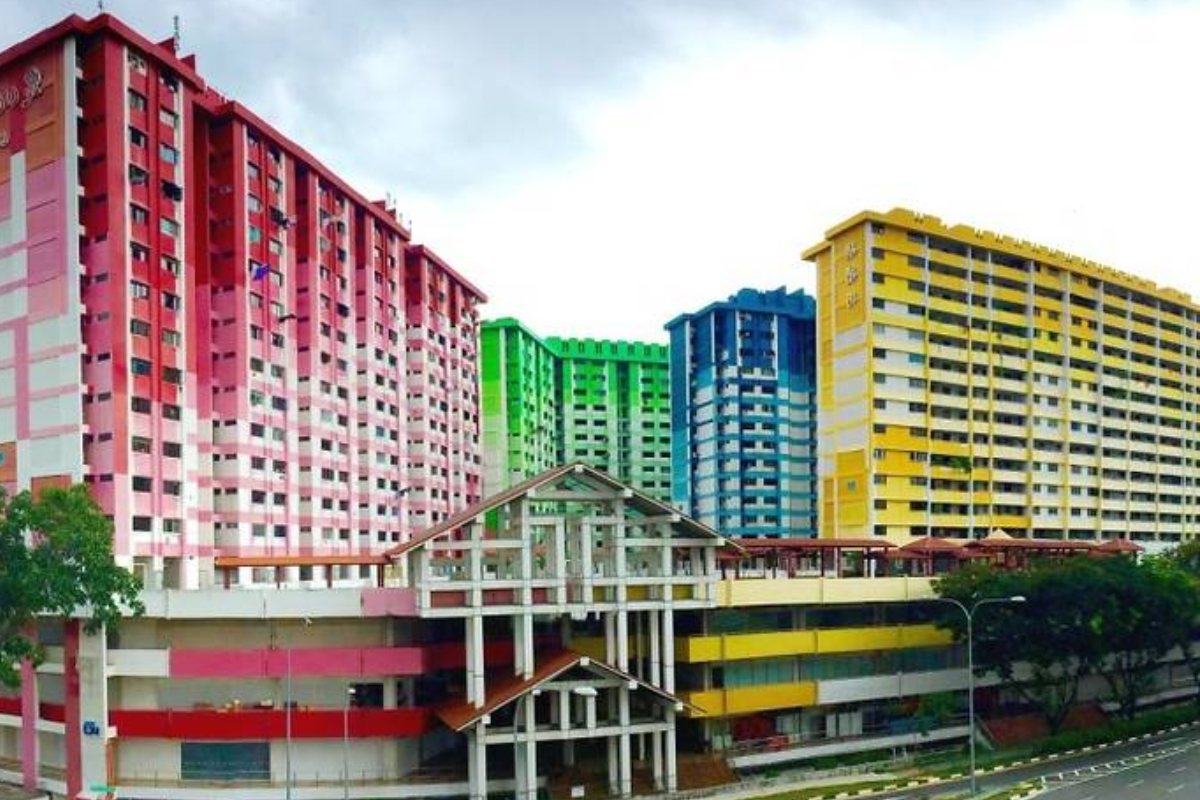
Rochor Centre was built by the Housing & Development Board (HDB) in 1977 to house both residents and shops. Located at 1 Rochor Road in Singapore (postal code 180001), it stood in the Rochor area near Bugis. The design followed a podium-and-tower style: retail units on the first three storeys, a communal podium at level four, and residential flats from level five onward.
A neighbourhood sprouting up
Over 500 households lived at Rochor Centre, while 180+ shops offered everything from traditional religious items to everyday snacks. Families, elderly residents, and shopkeepers shared spaces, creating an interwoven community.
From white to vivid colours: how the centre became a landmark
When Rochor Centre opened, the blocks were plain white or light grey. They remained that way for nearly two decades. The Interim Upgrading Programme in 1994 not only improved lifts, covered walkways, and landscaped common areas but also brought a repainting project. Each of the four towers received a different colour: red, blue, green, and yellow. These bright tones turned the estate into an instantly recognisable landmark.
Residents often remarked how the colours lifted spirits. Visitors, too, remembered the cheerful facades, making Rochor Centre a part of Bugis’ identity. The rainbow palette was more than aesthetic; it symbolised life and community.
Internal cultural connections
Nearby cultural hubs added layers to the community experience. Locals sometimes visited Queenstown Cinema and Bowl for leisure after shopping or dining. The integration of public spaces and entertainment enriched everyday life and reinforced Rochor Centre’s role as a social anchor.
Community life under rainbow walls
Every floor had its rhythm. Children played on the fourth-floor podium, while adults used common spaces to meet neighbours. Mr Victor Devan, a long-time resident, described waking up to the azan from nearby Abdul Gaffor Mosque, a gentle reminder of Singapore’s layered urban life. Shopkeepers, like Jackie Chua at Kwang Hui Kopitiam, felt a deep connection to the community, continuing their businesses after relocation to preserve memories of the estate.
A heart for everyone
The podium-and-tower design encouraged interaction. Residents shared spaces for socialising, events, and casual encounters. These design choices made Rochor Centre more than housing; it became a living, breathing neighbourhood.
The bittersweet farewell; why the colours had to go
In 2011, the government announced Rochor Centre would be demolished for the North-South Corridor, a 21.5 km expressway linking northern Singapore to the city centre. Demolition began in June 2018 and finished in April 2019. Residents faced the emotional challenge of leaving behind decades of memories.
- Long-time neighbours felt like they were leaving family behind.
- Shopkeepers struggled to relocate businesses while maintaining loyal customers.
- Photographers and heritage enthusiasts documented the final days.
Legacy beyond demolition: what stayed after the rainbow
- Memories preserved by people. Residents and photographers kept photos, sketches, and stories.
- Relocation to Kallang Trivista. Around 91% of residents moved to new flats in Kallang Trivista.
- Future campus plan. Singapore University of Social Sciences plans a campus on the former site by the mid-2030s.
- Cultural memory. The rainbow design remains a symbol of nostalgia, community, and Singapore’s urban heritage.
At a glance: Rochor Centre’s colourful journey
| Building | Key facts | Nearest MRT | Sources |
|---|---|---|---|
| Rochor Centre | 4 towers, 567 flats, 183 shops; built 1977, painted colours 1994, demolished 2019 | Bugis / Rochor area (nearest MRT: Bugis or Lavender) | Official HDB records, news articles |
Nearby neighbourhood connections
Residents often explored local parks and heritage spaces that offered both recreation and cultural experiences. Kallang Riverside Park provided scenic green spaces for families to picnic, jog, or host community events, making it a favourite weekend destination. The park’s riverside trails also allowed residents to enjoy nature walks while staying close to home. Meanwhile, nearby heritage sites added a layer of cultural depth, attracting visitors with thematic architecture, exhibitions, and entertainment offerings. Festivals and heritage tours brought in weekend crowds, creating a lively atmosphere and connecting Rochor Centre to the broader Singaporean urban fabric. These nearby destinations strengthened social bonds, gave residents convenient leisure options, and highlighted the importance of blending public housing with accessible cultural and recreational spaces.
The story within the walls
The rainbow colours were joyful, but the stories behind them made Rochor Centre truly memorable. Children ran through the corridors after school, their laughter echoing off the red, blue, green, and yellow walls. Families celebrated birthdays in the void decks, while shop owners marked business milestones, turning everyday spaces into places of celebration. The vibrant colours seemed to mirror the energy and diversity of those who lived there.
Festivals brought the estate to life. During Hari Raya, lanterns and decorations were hung along walkways. Chinese New Year saw red banners adorning the facades, blending naturally with the colourful towers. Deepavali celebrations added music and lights, giving residents a sense of shared joy and belonging. Each festival created temporary but vivid memories, reinforcing the estate as more than just a place to sleep.
Daily routines also carried their own charm. Morning walks meant greetings exchanged between neighbours, and shopkeepers prepared breakfast for regulars, weaving simple acts into the rhythm of community life. Elderly residents shared stories from decades past, creating a living archive of the estate’s history. In this way, Rochor Centre became a tapestry of life, where the rainbow walls served as both a backdrop and a witness to countless human experiences.
Rochor Centre in the context of Singapore’s HDB history
Rochor Centre’s evolution is part of the larger story of public housing in Singapore. Built in the late 1970s, it reflected early efforts to combine residential, commercial, and social spaces in one estate, a model that shaped many subsequent HDB developments. Its podium-and-tower design, with communal areas bridging the residential and retail sections, demonstrated an intention to foster interaction and create a sense of neighbourhood.
The colourful repainting in 1994 highlighted how HDB estates could go beyond functionality to offer joy, identity, and community pride. Residents and shopkeepers became co-creators of their environment, turning ordinary blocks into something memorable. These transformations were not just cosmetic; they mirrored Singapore’s broader public housing philosophy of integrating design, livability, and social cohesion.
For a broader understanding of how Rochor Centre fits into Singapore’s housing narrative, one can read about the history of HDB estates. From post-war flats to modern high-rises, each wave of development carried lessons about resident needs, urban planning, and community life. Rochor Centre’s story shows how a single estate could embody decades of learning, combining architectural experimentation, community engagement, and emotional resonance in ways that left a lasting mark on the city’s social and visual landscape.
Final reflections on the rainbow
The story of Rochor Centre is more than colour on walls. It is about people, connections, and the ways in which built environments shape daily life. From white towers to rainbow hues, the estate illustrated how design can impact emotion, community cohesion, and cultural memory.
Even though Rochor Centre no longer stands, the memories, stories, and photographs ensure it lives on in Singapore’s collective urban heritage. The laughter, daily routines, and friendships once fostered there remind us that buildings are not just structures; they are homes, landmarks, and repositories of human experience.