Key takeaway
Martin Silva quietly transformed his own HDB common-area patio in Toa Payoh into a glowing Christmas gathering spot. Despite early pushback and fines, he persisted. Over time, what started as a personal holiday display grew into a shared festive space, and became a symbol of community spirit in Toa Payoh.
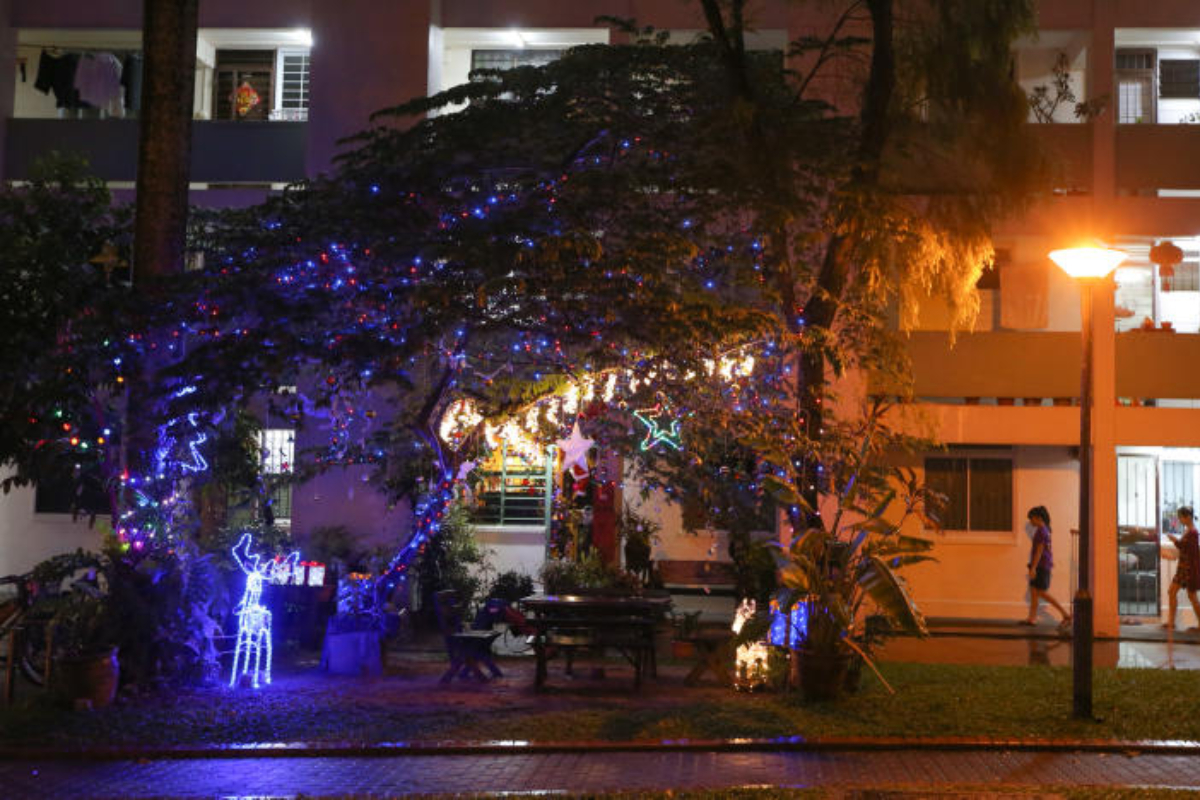
On a quiet Lorong in Toa Payoh, something magical happens every December. It is not a shopping mall or a tourist attraction, but the front patio of a ground-floor HDB flat. There, resident Martin Silva sets up lights, decorations and even LED reindeer. And somehow, that small corner of Toa Payoh has become a festive meeting spot for neighbours. Children run around with glowing lanterns while parents chat under the warm lights, turning the street into a community gathering hub that feels alive and welcoming.
The Origins of Martin Silva’s Christmas Corner
Martin Silva, a long-time Toa Payoh resident, began decorating his flat’s common area three decades ago with makeshift Christmas lights and figures. He wasn’t backing a commercial spectacle. He simply wanted to spread cheer. His home lit up with glittering lights, reindeer, and hopeful holiday warmth, year after year. At first, only a handful of neighbours stopped by to admire the display, but word spread quickly, and soon residents from other blocks started walking down to enjoy the festive scene, bringing small gifts and cards to add to the atmosphere.
Challenges from Town Council
Despite the joyful intention, Silva’s decorations ran into trouble. The Bishan-Toa Payoh Town Council deemed the decorations unauthorised. He was fined multiple times. Some neighbours raised safety and disruption concerns, citing potential electrical hazards and blocked walkways. The town council worried about use of shared common space. But Silva stayed firm. He adapted by ensuring his wiring was safe, decorations were neatly arranged, and visitors could enjoy the display without obstructing daily activities, demonstrating a balance between creativity and responsibility that ultimately won over some initial skeptics.
A Turning Point: Community Acknowledgment
The perseverance paid off. Local MP Zainudin Nordin publicly supported Silva. He argued that the display brought the local “kampung spirit” back to a modern estate. What followed was an agreement: Silva’s decorations would stay, but as a community space, not a private display. He would open up his patio to anyone who wanted to enjoy it. Over time, neighbours began to see it less as his decorations, and more as a shared festive corner. The shared space even encouraged visits to other nearby hubs like the largest hawker centre, highlighting communal life in Singapore’s heartlands.
Why It Resonates: Building a Sense of Belonging
What Martin Silva did goes beyond lights and reindeer. It turned a simple common area into a social node. Families queued for photos. Strangers stopped to chat under his glow. The space became a gentle reminder that home in HDB flats can be communal, not just physically, but emotionally. Silva’s efforts rekindled a sense of togetherness, creating informal meet-ups where residents exchanged stories, baked treats for one another, and formed lasting friendships. His initiative shows how small actions can nurture strong social bonds in urban environments.
A Broader Context: Toa Payoh’s Iconic Spaces
To understand Silva’s impact, it helps to look at Toa Payoh in a broader light. The neighbourhood is rich in heritage and communal places:
| Building | Key facts | Nearest MRT | Sources |
|---|---|---|---|
| Toa Payoh Dragon Playground | Built in 1979, steel‑ring dragon slide, cultural icon | Toa Payoh MRT (NS 19) | Source |
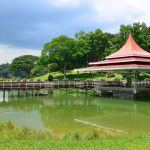
| Toa Payoh Town Park | 4.8 ha landscaped park, includes pond and pavilion | Toa Payoh HDB Hub / Toa Payoh MRT | Source |
| Toa Payoh Public Library | Opened 1974, three floors, ~4,125 m² | Toa Payoh MRT | Source |
How Silva’s Decorations Influenced Singapore’s Wider Festive Practices
What happens in Toa Payoh did not stay in Toa Payoh. His gesture showed what local community-led holiday decorating could look like, and it resonated beyond his street. Even national events such as Orchard Road’s Christmas light-up incorporated nods to local heritage, including the failed theme park aesthetics that once attempted large-scale festive engagement. The contrast between a corporate spectacle and Silva’s intimate display highlighted the power of community-led initiatives. It also encouraged other grassroots decorations in different HDB towns across Singapore, inspiring residents to creatively reclaim shared spaces during festive seasons.
How the Community Turned a Fine Into a Feature
Silva’s actions followed a clear, surprising arc:
- He decorated his patio with lights and reindeer on his own.
- Town council fined him repeatedly.
- Local MP Zainudin Nordin backed him publicly.
- They agreed the display stays, but as a community space.
- Neighbours began treating it as a shared gathering place.
That sequence shows not just resistance or rebellion, but negotiation. In the end, it became a shared tradition, reinforcing how communal spaces can thrive when residents take initiative. The story also demonstrates how local authorities and communities can work together to support creativity while maintaining safety and order.
Expanding Festivities Across the Neighbourhood
Over the years, neighbouring residents began contributing their own decorations, creating an unofficial festive trail along the Lorong. Children’s artwork, miniature Christmas trees, and hand-crafted ornaments appeared on nearby balconies and corridors. Local schools organized visits for students to admire the lights, turning Silva’s patio into an educational and cultural experience. The collective participation created a sense of ownership and pride in the community. Annual social gatherings sprouted around the display, cementing Toa Payoh’s identity as a neighbourhood that values human connection, tradition, and creativity in daily life.
Lessons from Silva’s Festive Initiative
His example offers ideas for how community spaces can be gently shaped, even when regulations seem rigid.
- Small acts matter: one resident’s lights can light up more than just his home.
- Persistence pays: despite fines, silence or push‑back, Silva carried on.
- Dialogue helps: working with community leaders opened the way for compromise.
- Personal gifts can become collective ones: his decorations evolved into a shared space.
- Heritage matters: the link to Toa Payoh’s kampung spirit and dragon playground roots gave the display deeper meaning.
The Human Story Behind the Glow
Martin Silva is not famous for wealth or power. He is a neighbour who chose to decorate not because he had to, but because he cared. He turned his patio into a glow-in-the-dark invitation. People came, families photographed themselves, kids laughed. Through his lights, he built social ties. He reminded people that community can begin in ordinary places. Many details about this tradition are chronicled online, providing further context on Toa Payoh Christmas decorations.
A Festive Legacy That Grows
Today, the lights don’t just shine on his porch. They reflect how simple, personal wishes can become communal joys. Martin Silva’s annual effort went from being penalised to being prized. His Christmas corner in Toa Payoh continues to be a space for neighbors to connect, an emblem of the way one person’s heart can change a place for many. Each year, new visitors and tourists stop by, contributing stories and small ornaments, ensuring that the display continues to evolve. The legacy of joy, connection, and shared tradition lives on in the heart of Toa Payoh.
Planning Your Own Community Display
Silva’s story can inspire other residents looking to create small festive spaces in their neighbourhoods. Start by choosing a safe, accessible spot, involve neighbours early, and consider how your decorations can become interactive or educational. Even small lights or simple ornaments can spark engagement. By coordinating with local authorities, residents can ensure that their festive display is both safe and celebrated. Sharing the vision on social media or community boards can attract volunteers and create an enduring sense of participation, turning a personal project into a collective experience.